Palmistry - AI Palm Reader
HoangSiLifestyle
3.40.00 Reviews
- Version
- 1.5.8
- Installs
- 10.00M
- Age Rating
- Everyone
Screenshots

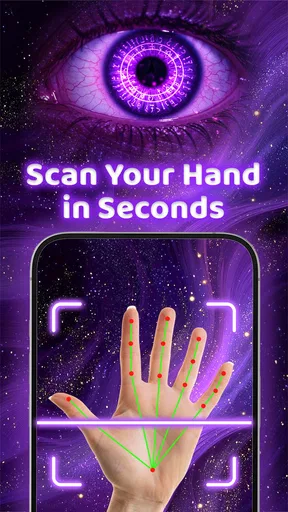
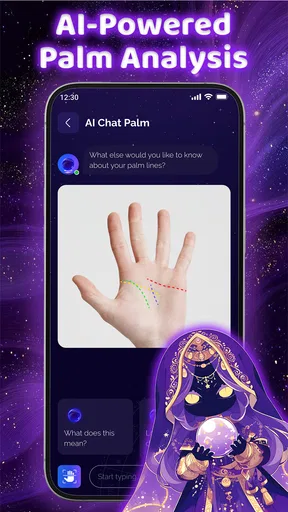
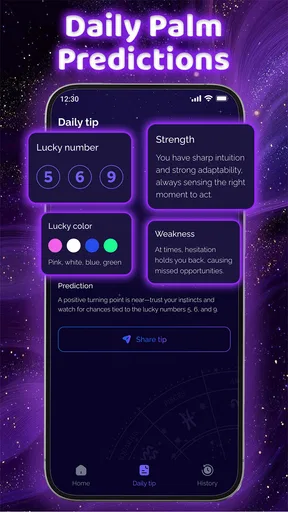

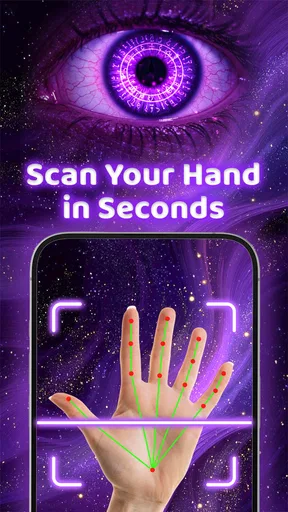
Our Review of Palmistry - AI Palm Reader
 Analysis by Appyee
I approached Palmistry - AI Palm Reader as a light, curiosity-driven lifestyle app rather than a tool for making serious decisions. Its main appeal is straightforward: you explore palm reading, look at possible life predictions, and receive AI-style advice in one place. After spending time with it, I found the experience easiest to enjoy when I treated the results as prompts for reflection instead of fixed statements about my future.
That distinction matters from the beginning. A palm-reading app can be entertaining, but it cannot replace medical, financial, legal, or relationship advice from a qualified person. The best way to use this app is to stay curious, notice which parts feel personally relevant, and leave the rest behind. The useful outcome is self-reflection, not certainty.
What to expect from the palm-reading experience
The app sits in the lifestyle category and is developed by HoangSi. It is free to install, aimed at Everyone, and its current version is 1.5.8. The store presents it simply as “Palmistry,” while the broader experience combines palm interpretation with life-prediction ideas and AI advice. That combination makes it more approachable than a traditional palmistry book, especially if you do not know the names or meanings of the major lines on your hand.
When I first opened it, I did not expect a long course or a deeply technical analysis. The appeal is the quick question-and-answer feeling: show interest in your palm, read an interpretation, then decide whether it gives you a new way to think about yourself. The app works best in short sessions. I would not use it as something that needs constant checking throughout the day.
The audience is fairly clear. It suits someone who enjoys personality quizzes, fortune-telling themes, casual astrology-style content, or reflective journaling prompts. It can also be a fun conversation starter with friends. If you are looking for evidence-based personality assessment, professional counseling, or a detailed historical study of palmistry, this is not the right substitute.
The public response is mixed but substantial: the app has an average rating of 3.4 from around 781 ratings and has passed 10 million installs. I read that as a sign of broad curiosity rather than proof that every user will find the interpretations convincing. People usually approach this kind of app with very different expectations, so the same result may feel amusing to one person and too general to another.
How I would frame the results
I found it helpful to read each interpretation in three layers. First, I looked for the direct message. Second, I asked whether it connected with something I was already thinking about. Third, I checked whether I was accepting it simply because it sounded flattering or dramatic. That small pause makes the experience more honest.
For example, if a result suggests that I am entering a period of change, I do not treat that as a prediction that must happen. Instead, I might use it to ask whether I have been avoiding a decision, postponing a conversation, or considering a new routine. The app becomes more useful when its language starts a personal question rather than ending the discussion.
One non-obvious advantage is that palmistry gives the session a physical starting point. Instead of answering a long personality questionnaire, I begin with my hand and then move into interpretation. That can feel less demanding for a first-time user. The trade-off is that the reading may feel less personally precise than an assessment built around detailed questions and consistent scoring.
Getting started without overthinking the first reading
My advice is to begin with realistic expectations and a few quiet minutes. You do not need to prepare a life story before trying it. Open the app when you can focus, follow the palm-reading flow, and read the first result slowly. The first session is mainly about understanding how the app presents its ideas, not about obtaining a definitive answer.
If the app asks you to position or show your palm, take your time rather than rushing through the action. A clear, comfortable view is more sensible than trying to force an awkward angle. I would also avoid making the first attempt in a dark room, while walking, or when your hands are busy. Even for a casual tool, a calm setup makes the interaction less frustrating.
There is another practical reason to slow down: the first reading creates your reference point. If you immediately repeat the process several times because you dislike the wording, you may end up chasing a more favorable result instead of learning anything from the experience. I prefer to keep the first interpretation, note what stood out, and return later only if I have a genuine reason to compare my thoughts.
The app is free, but it includes in-app purchases ranging from $0.99 to $29.99 per item. That makes it important to pay attention to any purchase screen and understand what is being offered before confirming anything. I would not assume that every part of the experience is included simply because the initial installation costs nothing. A first-time user should feel comfortable stopping at a purchase prompt and deciding whether the additional content is worth it.
Because the content rating is Everyone, the tone is accessible to a wide audience. Still, age suitability does not make every prediction emotionally neutral. A dramatic statement about relationships, health, or the future can affect a younger user differently from an adult. I would encourage younger users to discuss surprising or upsetting results with a trusted adult rather than treating the app’s wording as a verdict.
A simple first-session routine
Start with one clear intention, such as curiosity about personality, habits, or general direction.
Complete the palm-reading step without repeatedly changing the conditions to obtain a different message.
Read the interpretation once for the overall idea, then a second time for details that genuinely connect with your life.
Write down one useful question the result raises, rather than trying to prove whether the prediction is true.
Close the app before making any important decision based on the reading.
This routine sounds simple, but it avoids the most common trap: turning a playful reading into a search for certainty. It also gives the app a clear job. Instead of asking it to explain everything about me, I use it to offer one prompt that I can examine with my own judgment.
Reaching the first meaningful result
For me, the first successful action was not merely completing the palm-reading interaction. It was finding one sentence that led to a practical reflection. A result about personal direction, for instance, became useful when I connected it with a real choice I had been delaying. The value came from the follow-up thought, not from assuming the app had discovered a hidden fact.
Try this everyday scenario: imagine that you open the app after a tiring week and receive advice that encourages patience or a change in priorities. Rather than reorganizing your life immediately, compare that message with your calendar and current stress. Maybe the sensible response is to postpone an unnecessary commitment, take a proper break, or have a conversation you have been avoiding. The app can help you name a feeling, but you still decide what action makes sense.
A second useful workflow is to use the app as a journaling opener. Read the result, copy the central idea into your notes in your own words, and answer three questions: What part feels accurate? What part feels too broad? What small action would improve my situation regardless of the prediction? This method protects you from passive acceptance while giving the reading a practical purpose.
I also found that sharing the experience works better when everyone treats it as entertainment. Friends can compare which parts sound familiar, but I would avoid presenting one person’s reading as a diagnosis of their character. Palmistry is especially easy to overstate because the language can sound personal even when many people could relate to it.
One trade-off becomes clearer after the first successful session. The app offers immediacy, while a book or experienced palmistry practitioner may offer more context. The app is convenient when I want a quick interpretation without studying terminology. A book is better when I want to understand why a particular line has traditionally been interpreted in a certain way. A professional conversation is better when the real issue is emotional or practical and needs careful listening.
How to get more from AI advice
I would not read the AI advice as a command. Treat it like a brainstorming partner that produces a possible angle. If it suggests focusing on confidence, ask what confidence means in your current situation: speaking up at work, setting a boundary, applying for something new, or simply resting without guilt. Turning a broad theme into a specific question is where the advice becomes more personal.
It is also worth separating short-term mood from long-term identity. A reading may feel convincing because it matches how you feel today. That does not mean it defines you permanently. I prefer to revisit my own notes after a few days and see whether the idea still matters. If it does, I can act on it for ordinary reasons; if it does not, I let it go.
Do not use a prediction to justify risky spending, medical choices, ending a relationship, or trusting someone who has given you reasons for concern. Those decisions need evidence and real-world conversation. The app’s free entry point makes experimentation easy, but the low barrier should not lower your standards for important choices.
Common confusion and where the experience can feel limited
A first-time user may wonder whether the app is meant to be scientifically accurate. I would answer no: it is best understood as entertainment and reflective guidance. The presence of AI language can make the results sound more authoritative than they are, so I recommend keeping a healthy distance from confident wording. A polished sentence is not the same thing as verified insight.
Another possible confusion is expecting every reading to feel completely unique. Palmistry interpretations often use familiar themes such as confidence, change, relationships, ambition, or patience. When a message feels broad, that does not automatically make it useless, but it does mean I should test it against my actual circumstances rather than assuming it was written only for me.
Some users may also expect the app to replace a full palmistry lesson. That is not how I would approach it. The experience is more suitable for quick exploration than for building a serious technical understanding of palm lines, hand shapes, or traditional schools of interpretation. If learning the subject is your main goal, a well-structured book or course will probably serve you better.
The rating of 3.4 suggests that the experience has room for improvement from the perspective of many users. I would not ignore that signal, although ratings alone cannot explain whether someone disliked the interpretations, the flow, the purchase options, or the overall concept. My own practical conclusion is to try it with modest expectations and stop if the results feel repetitive, unhelpful, or emotionally uncomfortable.
Cost is another point to keep in mind. Since the app is free with optional purchases, it is possible to explore the basic experience before deciding whether to spend anything. I would set a personal limit before opening a paid offer, especially if the wording suggests that another reading might provide the certainty the previous one did not. Paying for extra curiosity is a personal choice; paying repeatedly to chase reassurance is usually a poor trade.
Privacy-minded users should make their own comfort judgment before sharing anything personal or using a feature that requests information. I would keep the session focused on the minimum needed for the experience and avoid entering sensitive details simply because a prompt sounds inviting. A palm-reading app does not need to become a record of every private concern in your life.
Who should choose another option
I would skip this app if I wanted reliable predictions, a clinical mental-health tool, structured coaching, or a measurable way to track habits. A journaling app is better for recording thoughts over time. A meditation app is better for guided relaxation. A personality assessment with a transparent method is better when I want a repeatable questionnaire and clearer interpretation limits.
I would also recommend caution for anyone who tends to worry about predictions or repeatedly checks fortune-telling content for reassurance. In that situation, the app may encourage more uncertainty instead of reducing it. The right choice could be a conversation with a trusted person, a counselor, or a practical planning tool that focuses on controllable actions.
On the other hand, I think it is a reasonable choice for a curious newcomer who wants a gentle introduction to palmistry without committing to a book or appointment. It is also suitable for a casual group activity, provided everyone understands that the results are interpretive and not factual judgments about one another.
My next-step recommendation after trying it
After the first reading, I would not immediately purchase anything or repeat the process. I would save one takeaway in my notes, connect it with a real situation, and wait to see whether it leads to a useful question. That pause is the difference between using the app thoughtfully and letting a prediction steer the session.
If the experience feels enjoyable, return with a different purpose rather than asking the same question again. One session can be about relationships, another about personal habits, and another about a decision you are already considering. Keep the themes separate so that the results do not blur into one large story about your entire life.
It is also worth checking whether the app remains useful after the novelty fades. The first reading may be entertaining simply because it is new. A stronger test is whether its advice helps you notice something, write more honestly, or begin a small positive action. If it does, keep it as an occasional reflection tool. If it only makes you seek another prediction, there is no reason to force a routine.
My overall opinion is positive but deliberately limited. Palmistry - AI Palm Reader is an accessible free lifestyle app for curiosity, casual palm-reading exploration, and AI-generated reflection. HoangSi has made the basic idea easy to approach, and the large install base shows that many people are interested in this style of experience. Still, the average rating of 3.4 is a reminder to keep expectations measured, while the optional purchases make careful attention worthwhile.
I would recommend it to a friend who enjoys fortune-telling themes and understands that interpretation is not proof. I would not recommend using it for serious decisions or as a replacement for professional advice. Used briefly, thoughtfully, and with a clear boundary between entertainment and reality, it can provide an engaging prompt for self-reflection. That is where I found its strongest value—and also where its limits are easiest to respect.
Verdict
Strengths of Palmistry - AI Palm Reader
- Quick AI-based palm readings with an easy-to-follow interface.
- Useful for casual entertainment and curiosity about palmistry.
- Simple hand-positioning guidance helps improve scan attempts.
- Readings are presented in a clear format for beginners.
- Convenient way to explore palmistry without prior knowledge.
Limitations of Palmistry - AI Palm Reader
- Results may vary noticeably between scans of the same hand.
- Palm analysis can be difficult in dim lighting or blurry photos.
- Interpretations are not scientifically validated or professionally assessed.
- Some features or detailed readings may require in-app purchases.
- Users should review privacy terms before uploading hand images.
Other Releases by HoangSi
View All
Emoji Battery: Status Bar
Personalization4.1
Similar Picks in This Category
View All
SmartThings
Samsung Electronics Co., Ltd.4.6

Google Home
Google LLC4.0

Pinterest4.2

Astrotalk - Talk to Astrologer
Astrology & Horoscope4.7

My Verizon
Verizon Consumer Group4.5

Samsung Wallet (Samsung Pay)
Samsung Electronics Co., Ltd.4.1
Frequently Asked Questions
What is Palmistry - AI Palm Reader, and how does it work?
Palmistry - AI Palm Reader is an entertainment app that uses artificial intelligence and image analysis to interpret lines and features visible on your palm. After taking or uploading a photograph of your hand, the app examines the image and provides readings related to personality, relationships, career, and other traditional palmistry topics. Its results should be viewed as general guidance rather than scientifically proven predictions.
How should I take a palm photo for the best reading?
For the clearest result, take the picture in a bright, evenly lit place and keep your palm fully open. Make sure the entire hand is visible, including the wrist and fingertips, while avoiding shadows, blur, filters, gloves, or excessive background clutter. Clean camera lenses and a steady hand can also improve recognition. If the app offers hand-selection options, choose the correct hand before beginning the analysis.
Is Palmistry - AI Palm Reader accurate or scientifically reliable?
The app can identify visible palm patterns and generate an interpretation based on palmistry traditions and automated analysis, but it cannot reliably predict the future or diagnose personality, health, relationships, or financial outcomes. Palm reading is generally considered entertainment rather than a scientific method. Treat the results as an interesting, reflective experience and avoid making important life decisions based solely on an AI-generated reading.
Does the app require personal information or access to my camera?
Palmistry - AI Palm Reader normally needs camera or photo-library access so it can capture or analyze an image of your palm. Before using it, review the permission requests and the developer’s privacy policy to understand how photographs and related data may be processed, stored, or shared. Avoid uploading images containing other people or sensitive information, and revoke permissions later through your device settings if necessary.
Is Palmistry - AI Palm Reader free to download and use?
The app may be available as a free download while offering optional premium features, subscriptions, advertisements, or in-app purchases. Some detailed readings, extra interpretations, or unlimited scans may be restricted until you upgrade. Check the current store listing and the payment screen carefully before confirming anything, especially trial terms, renewal dates, and cancellation instructions. Availability and pricing can differ between Android and iOS.
